Circle Loading Preloader

Office Leasing in 2025: Where Tenants Still Control the Deal

Overview

Office leasing in 2025 is less about published market rates and more about leverage.

FEATURED

Office Leasing in 2025: Where Tenant Leverage Exists

Despite persistent uncertainty around hybrid work and capital markets, tenants who understand where flexibility still exists are securing meaningful advantages. Below are the leverage points that continue to matter—and how smart tenants are using them.

Office Leasing Trends Shaping Tenant Leverage in 2025

Entering 2025, office leasing trends continue to favor tenants across many U.S. commercial real estate markets. Elevated vacancy levels, ongoing uncertainty around long-term office utilization, and a significant volume of upcoming lease expirations have shifted negotiating leverage away from landlords—particularly in non-trophy assets.

While some high-quality buildings remain competitive, much of the broader office market is still working through excess supply. As a result, tenants evaluating renewals or relocations in 2025 are encountering a more flexible leasing environment than they would have seen just a few years ago. These market conditions are shaping how tenants approach office leasing decisions, with leverage showing up in structure and flexibility rather than headline rent alone.

Challenge

The office market remains fragmented. Tenants are cautious, landlords are selective, and market narratives often lag behind on-the-ground reality. Vacancy pressure and refinancing timelines are quietly reshaping negotiations, even when asking rents suggest otherwise.

What Smart Tenants Are Doing Right Now

As specialists in niche commercial brokerage, we understood that this wasn’t about square footage—it was about fit.

  1. Pushing for visibility and branding rights. Building signage—once considered untouchable in many submarkets—is increasingly negotiable. Tenants who raise this early are finding landlords more flexible, particularly where visibility supports long-term tenancy.
  2. Using termination options strategically.  Termination clauses are re-emerging as a powerful tool. While landlords rarely embrace them outright, they are often achievable when paired with longer lease terms or structured penalties. For tenants, this creates downside protection and meaningful negotiating leverage.

In a recent suburban office transaction, a tenant secured exterior signage and a mid-term termination option in exchange for a longer lease commitment—reducing effective occupancy risk while improving landlord certainty.

How Tenant Leverage Is Showing Up in Office Lease Negotiations

In 2025, tenant leverage in office lease negotiations is showing up less in base rent reductions and more in overall deal economics. Landlords are increasingly willing to provide meaningful concession packages in order to maintain occupancy and stabilize cash flow.

This flexibility often includes higher tenant improvement allowances, extended rent abatement periods, and more favorable renewal or expansion options. In certain situations, landlords are also more open to right-sizing requests or shorter initial lease terms, particularly when facing near-term vacancy exposure. For tenants, the key is understanding where owners are most motivated and structuring negotiations accordingly rather than focusing solely on advertised rental rates.

Market Reality

The market is more tenant-driven than headline commentary suggests. Buildings still need occupants, and that reality consistently shows up in concessions, flexibility, and deal structure—particularly for prepared tenants.

Market Signal to Watch

Buckhead vacancy has grown by roughly 2.0 million square feet since summer 2022, creating sustained tenant leverage. Availability at this scale places downward pressure on deal structure, regardless of advertised asking rents.

Why Suburban Office Is Positioned to Win in 2025

Suburban office markets are increasingly compelling. Pricing resets, free parking, and reduced occupancy costs are driving tenant interest—especially for companies operating on hybrid schedules. A modest shift in location can unlock substantial long-term savings with limited operational downside.

A Note for Medical Practices

Medical office buildings remain valuable where referral adjacency matters, but patient experience often hinges on access. When parking is limited or costly, traditional office buildings can provide a smoother experience without sacrificing professionalism.

What Tenants Should Consider Before Making Office Leasing Decisions in 2025

Despite favorable market conditions, office leasing decisions in 2025 still require a disciplined approach. Not every building or landlord is equally motivated, and tenant leverage varies significantly by submarket, asset quality, and lease size.

Tenants should evaluate opportunities through the lens of long-term flexibility, total occupancy cost, and operational needs—not just short-term savings. A well-defined leasing strategy, supported by current market data and experienced tenant representation, allows tenants to capitalize on today’s leverage while maintaining future optionality as market conditions evolve.

Interested in understanding which landlords are actually negotiating right now?

If signage, flexibility, or suburban alternatives are on your radar, I’m happy to share where real leverage exists—and where it doesn’t.

Senior Director specializing in tenant representation, office leasing strategy, and healthcare real estate transactions.

Featured Stories

Office Leasing in 2024: Why It’s Still a Tenant’s Market in Atlanta

Headlines surrounding the office market have been largely apocalyptic, but from a tenant’s perspective, the reality on the ground looks very different...

Office Buildout Costs in 2024: Why Office Leasing Takes Longer and Costs More

Compared to a decade ago, office buildouts are more expensive, lease negotiations are more complex, and timelines have stretched significantly...

Office Leasing in 2024: Why Medical Office Buildings Continue to Outperform

While much of the office sector continues to work through structural change, medical office buildings (MOBs) remain one of the most resilient segments of commercial real estate...

Office Space Planning in 2024: Why Companies Are Using Less Space Per Employee

One of the most important—and often misunderstood—shifts in the office market is not where companies are leasing space, but how much space they are allocating per employee...

Office Rents in 2024: Why Asking Rents Remain High Despite Market Pressure

A common question among office tenants in 2024 is why asking rents haven’t fallen as sharply as market headlines might suggest...

Return to Office in 2025: What RTO Mandates Mean for Office Demand

The return-to-office conversation is no longer theoretical...
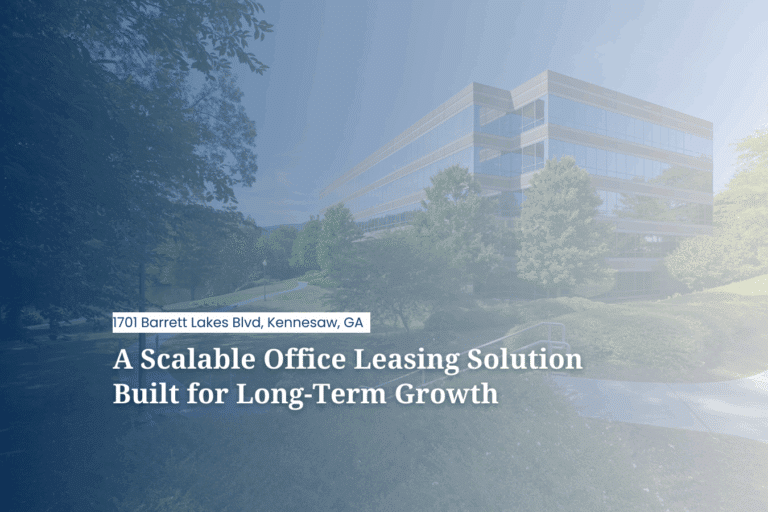
1701 Barrett Lakes Blvd, Kennesaw, GA

When a fast-growing Atlanta company faced foreclosure challenges, Lavista delivered a flexible leasing strategy that expanded their office footprint to 20,000 SF—while securing future growth...

1244 Park Vista Drive, Atlanta, GA

Turning a Former Hospice Property Into a High-Value Redevelopment Play...

Relocating Digestive Healthcare of Georgia

A Strategic Tenant Representation Success Story Overview In 2021, Digestive Healthcare of Georgia, a top gastroenterology practice in Metro Atlanta, began relocating from Piedmont Hospital’s main...


Featured Clients

Sign Up for Graham's Monthly Letter

Sign up with your email address to receive news and updates.